Introduction
Not sure what to order when you first arrive in Terengganu?
The food here can look unfamiliar even to travellers who have already visited other parts of Malaysia. Fish appears in everything from breakfast rice to grilled snacks, coconut milk is used in both savoury and sweet dishes, and some local favourites are quite different from what you might find in Kuala Lumpur or Penang.
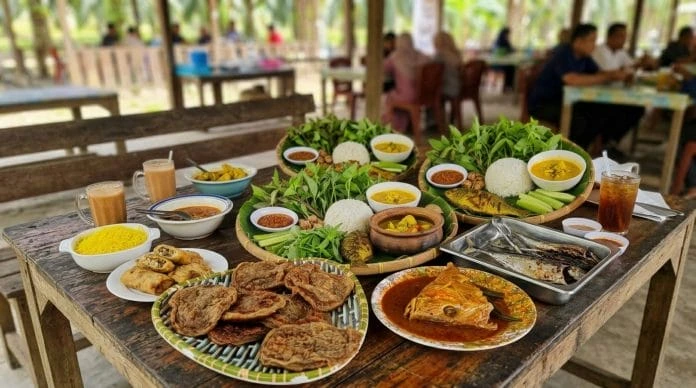
For a first visit, these seven Terengganu traditional foods give you a useful introduction to the state’s flavours. Tourism Malaysia highlights many of them among Terengganu’s signature delicacies, including nasi dagang, laksam, keropok lekor, ketupat sotong and sata. Malaysia Travel
- Nasi dagang — coconut-rich rice served with fish curry; ideal for breakfast.
- Keropok lekor — chewy fish-and-sago snack, often fried and served with chilli sauce.
- Sata — seasoned minced fish grilled inside banana leaves.
- Laksam — thick rice noodles in creamy fish and coconut gravy.
- Ketupat sotong — squid stuffed with glutinous rice and cooked in sweet coconut milk.
- The other two worth looking for are pulut lepa, a smoky glutinous-rice snack with fish filling, and akok, a rich local cake made with eggs, coconut milk and palm sugar.
What Terengganu Food Tastes Like
Terengganu sits on the east coast of Peninsular Malaysia, and its cuisine strongly reflects its relationship with the sea. Fresh fish, coconut, rice and local herbs appear repeatedly across traditional dishes. Tourism Malaysia specifically identifies seafood and rice-based food as important parts of the state’s dining culture. Malaysia Travel eBrochures
First-time visitors may also notice that breakfast here can be surprisingly substantial. Rice, fish curry and coconut-based gravies are perfectly normal morning meals.
Do not worry if some Malay food names are unfamiliar. In this guide, ikan means fish, sotong means squid and pulut refers to glutinous or sticky rice.
1. Nasi Dagang
If you try only one traditional breakfast in Terengganu, nasi dagang is one of the most representative places to start.
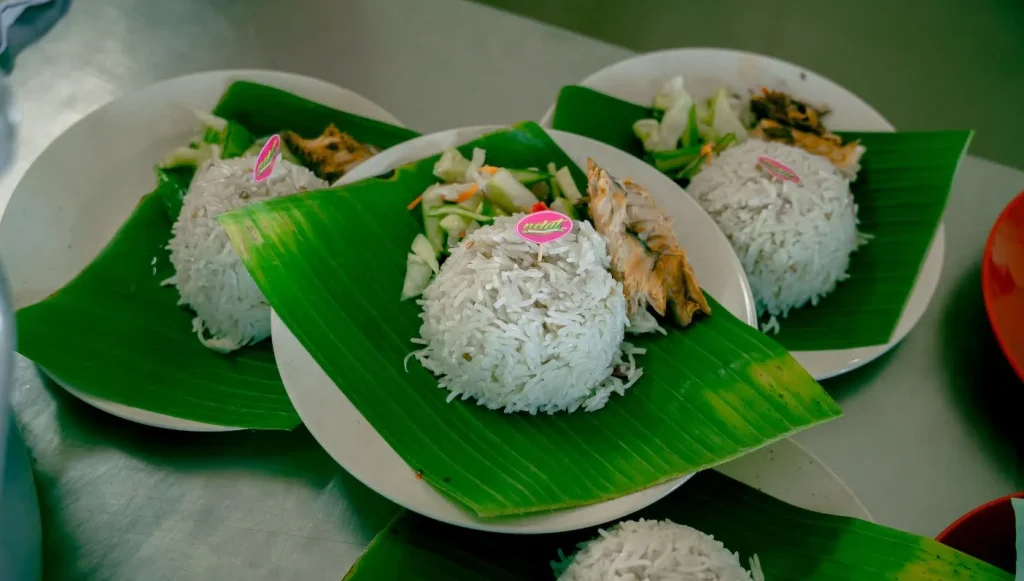
The Terengganu version combines regular rice and glutinous rice cooked with coconut milk, producing a fragrant, slightly rich texture. It is traditionally served with a fish curry commonly tuna or ikan tongkol alongside pickled vegetables. Tourism Malaysia describes it as one of the state’s classic local favourites. Malaysia Travel
What Does It Taste Like?
Expect a combination of creamy rice, aromatic spices and savoury fish curry. The pickled vegetables provide acidity and crunch, which helps balance the richer coconut flavours.
When Should You Eat It?
Breakfast is the ideal time.
Nasi dagang is commonly eaten in the morning, and popular stalls may sell out rather than continue serving throughout the day. If it is high on your food list, look for it earlier rather than saving it for dinner. Discovery Terengganu
First-timer tip: Do not expect something similar to nasi lemak. Both use coconut-rich rice, but the rice texture, accompanying curry and spices are noticeably different.
2. Keropok Lekor
Keropok lekor may be the easiest Terengganu snack for a first-time visitor to recognise once you have seen it.
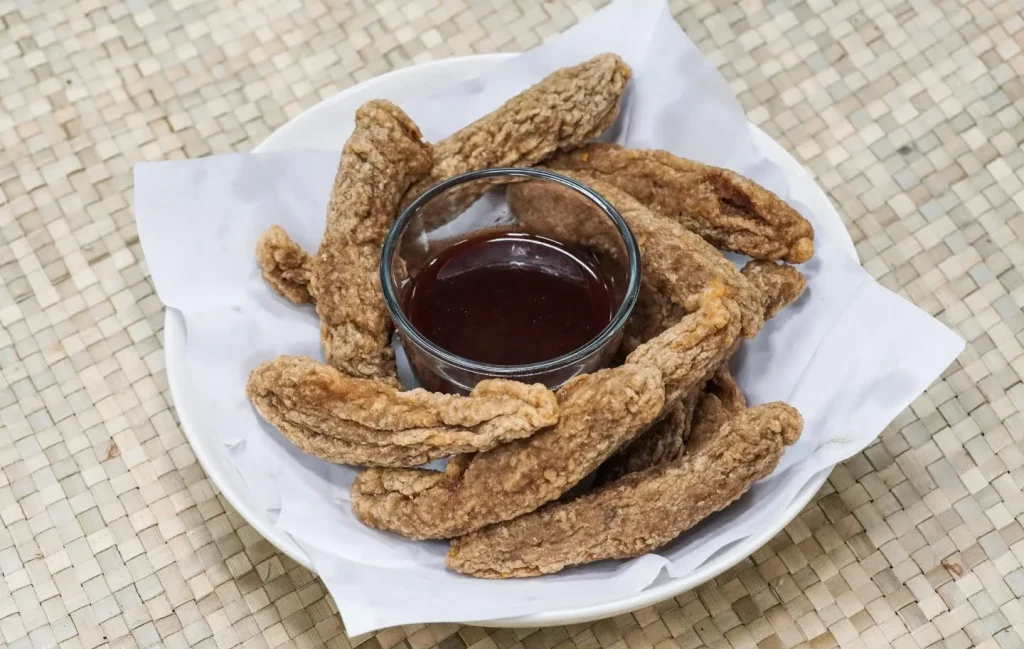
This local favourite is made using ground fish mixed with sago flour. The mixture is shaped into long pieces, traditionally boiled and commonly fried before serving. It is usually eaten with a sweet-spicy chilli dipping sauce. Malaysia Travel
Fried or Boiled?
You may encounter different preparations.
The fried version has a crisp outer layer while remaining chewy inside. Fresh boiled keropok lekor is softer and has a more noticeable fish flavour.
For someone trying it for the first time, freshly fried keropok lekor with chilli sauce is probably the most approachable introduction.
Where Will You Find It?
It is widely associated with Terengganu’s coastal food culture, and roadside stalls selling freshly cooked keropok lekor are common around the state. Losong in Kuala Terengganu is particularly associated with the snack. Discovery Terengganu
First-timer tip: Eat it while it is still hot. The texture changes considerably once it cools.
3. Sata
Sata also commonly written satar ,looks very different from ordinary grilled fish.
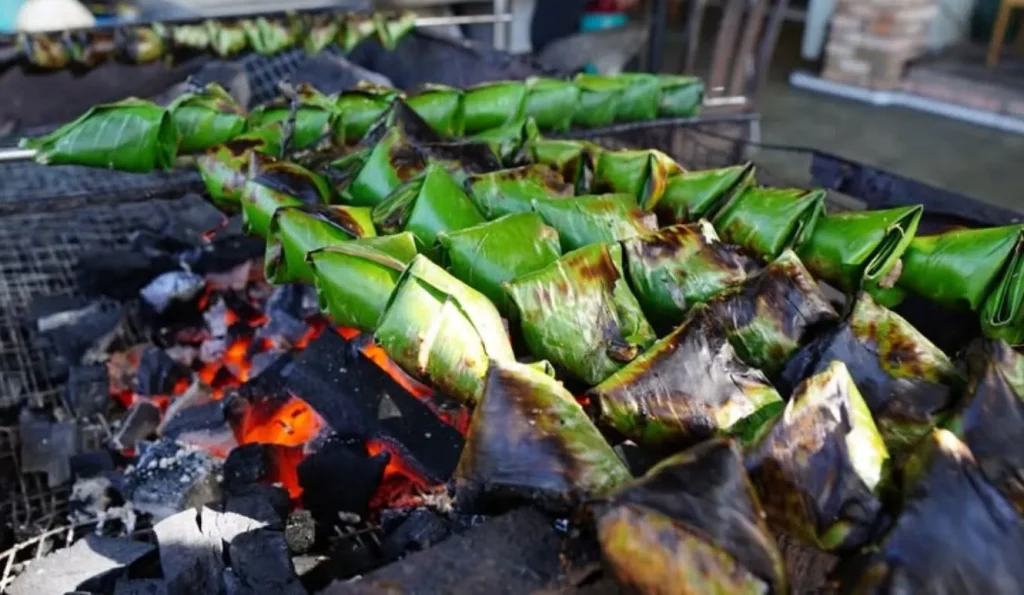
Finely minced fish is mixed with chilli and aromatic ingredients, wrapped inside banana leaves, folded into small pyramid shapes and grilled over charcoal. The banana leaves protect the filling while giving it a distinctive smoky aroma. Malaysia Travel
What Does Sata Taste Like?
It is soft rather than crispy, with a fish-forward flavour, mild heat and noticeable grilled aroma.
If keropok lekor shows you the chewy side of Terengganu’s fish snacks, sata shows you the softer and smokier side.
The dish is particularly associated with coastal areas of Terengganu, including Kemaman. Discovery Terengganu
First-timer tip: The banana leaf is the wrapper, not something you eat. Open it carefully and eat the cooked fish mixture inside.
4. Laksam
Laksam can initially confuse foreign visitors because it does not look much like the noodle soups they may associate with the word laksa.
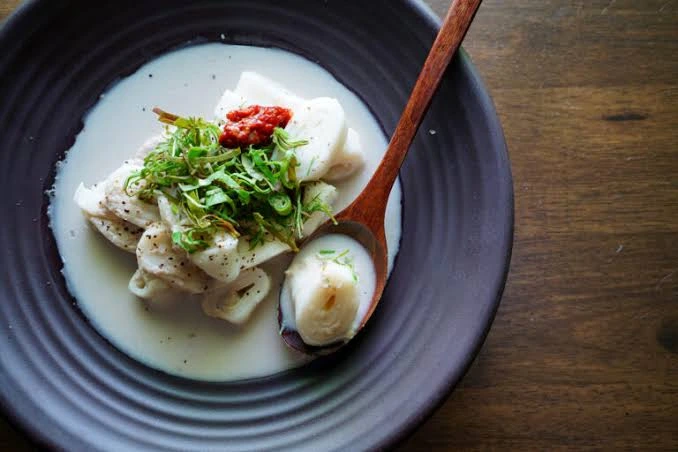
Its noodles are broad, thick and soft. They are usually rolled before being sliced into shorter pieces and covered with a creamy white gravy prepared using fish and coconut milk. Malaysia Travel
Fresh herbs and vegetables often accompany the dish, giving it freshness and texture.
Is Laksam Spicy?
The base gravy itself is generally creamy and savoury rather than intensely spicy. However, accompaniments and sambal can add heat.
For travellers who are cautious about Malaysian chilli levels, it is useful to ask for spicy condiments separately.
Laksam vs Laksa Terengganu
They are not the same dish.
Laksa Terengganu uses rice noodles and can come with either a white fish-and-coconut gravy or a red, chilli-based gravy. Laksam uses distinctive thick, flat noodle rolls with its creamy fish gravy. Malaysia Travel
First-timer tip: Try laksam at breakfast or lunch when local noodle dishes are easier to find.
5. Ketupat Sotong
This may be the most surprising dish on the list.
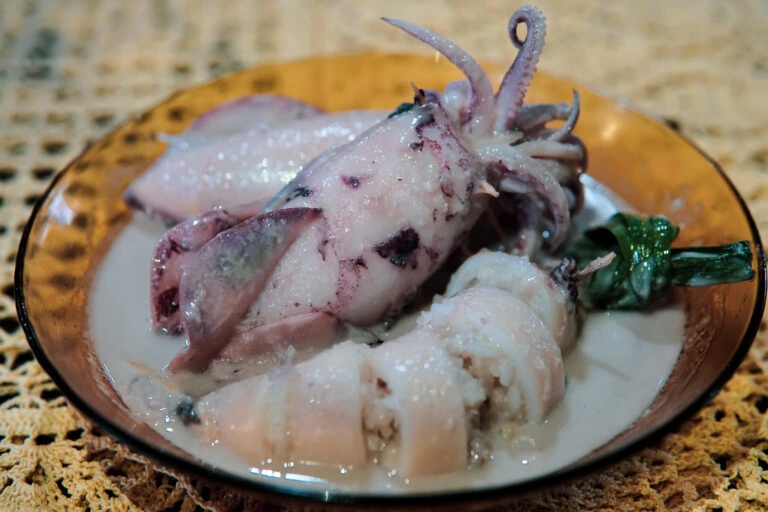
Ketupat sotong literally involves squid stuffed with glutinous rice. The stuffed squid is then cooked with coconut milk, and the Terengganu preparation can include palm sugar, giving the dish a mixture of creamy, sweet and lightly briny flavours. Malaysia Travel
It is very different from fried calamari or savoury grilled squid.
Is It Sweet or Savoury?
Both.
That contrast is exactly what makes it memorable. The natural seafood taste remains, but the coconut milk and sweetness create a flavour profile that may feel unusual on the first bite.
Tourism Malaysia notes that ketupat sotong is often enjoyed as an afternoon snack and can be easier to find during the post-monsoon squid season, particularly around April to June. Malaysia Travel
First-timer tip: Do not order it expecting a standard seafood main course. Think of it as a traditional local speciality with both sweet and savoury characteristics.
6. Pulut Lepa
Pulut lepa is one of those foods that can be easy to overlook because it arrives in a simple banana-leaf package.
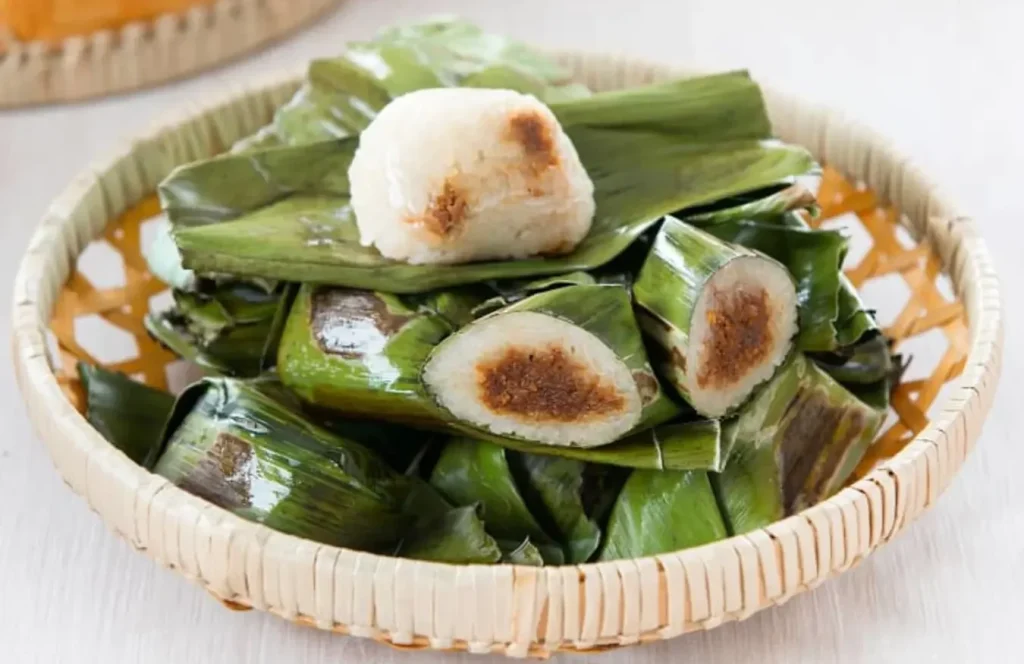
Inside is glutinous rice wrapped around a filling made with fish and grated coconut. The parcel is then grilled over charcoal, giving the rice and banana leaf a gently smoky aroma. Malaysia Travel
How Is It Different from Sata?
Both are grilled in banana leaves, but the eating experience is quite different.
Sata centres on seasoned minced fish. Pulut lepa has a substantial layer of sticky rice surrounding its fish-and-coconut filling, making it heavier and more filling.
It works particularly well as a snack between sightseeing stops or during a road trip along the Terengganu coast.
First-timer tip: If a stall sells both sata and pulut lepa, try one of each. Their wrappers may look similar from a distance, but the textures are completely different.
7. Akok
After so much fish, coconut gravy and rice, finish with something sweet.
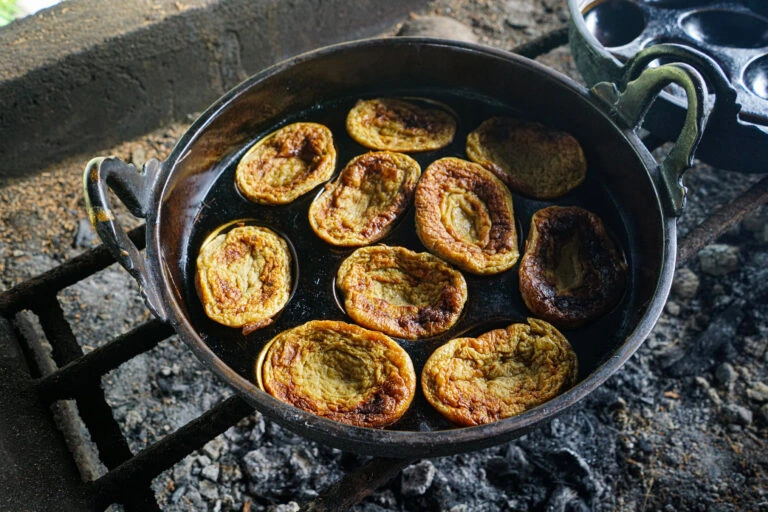
Akok is a traditional cake made with ingredients such as eggs, thick coconut milk, flour and palm sugar. It develops a golden-brown exterior and a soft, dense interior during cooking. Tourism Malaysia describes its texture as somewhere between kuih bakar and an egg tart. Malaysia Travel
The sweetness varies depending on the recipe, but the flavour normally leans towards egg, coconut and caramel-like palm sugar.
When Do Locals Eat Akok?
Akok is a snack or kuih rather than a main meal. Kuih is the Malaysian term used for a broad range of traditional cakes, sweets and bite-sized snacks.
It works well with tea or coffee in the afternoon and is also easy to take away.
First-timer tip: Do not judge akok by its wrinkled appearance. That uneven, caramelised surface is characteristic of the cake rather than a sign that it has been overcooked.
What Should First-Time Visitors Try First?
If you only have one day in Terengganu, start with nasi dagang for breakfast.
Later, try keropok lekor as an easy afternoon snack. If you encounter a charcoal grill selling sata or pulut lepa, that is a good chance to experience the state’s banana-leaf grilled foods.
For something more adventurous, choose ketupat sotong. Finish with akok if you want to add a local dessert to the day.
This gives you several sides of Terengganu cuisine without ordering seven heavy meals.
Is Terengganu Food Very Spicy?
Not necessarily.
Some dishes contain chilli or are served with sambal, but much of Terengganu cuisine also depends on coconut milk, fish, herbs, smoke and sweetness rather than pure heat.
If you have a low tolerance for chilli, the useful phrase is:
“Tak pedas, boleh?” – “Can it be not spicy?”
For sauces served separately, simply start with a small amount.
What About Halal Food?
Terengganu has a large Muslim population, and many traditional dishes are prepared by Muslim food vendors. However, travellers who specifically require formal halal certification should check the restaurant or packaged product itself rather than assuming certification based only on the type of food.
This matters particularly for international Muslim travellers who distinguish between Muslim-operated premises and officially certified halal businesses.
Final Thoughts
Trying Terengganu traditional foods is one of the easiest ways to understand how closely the state’s culture is connected with fishing, coconut, rice and coastal life.
Start with familiar formats such as nasi dagang and keropok lekor, then move towards dishes you may not encounter elsewhere, such as ketupat sotong or pulut lepa.
You do not need to try everything in one meal. Spread these seven dishes across breakfast, lunch, afternoon snacks and dessert, and the food itself becomes part of your Terengganu travel experience.