Introduction
Thinking of visiting Terengganu for turquoise islands, quiet beaches and traditional Malay culture? Your travel dates can make a major difference, especially if your plans involve Redang, Perhentian, Kapas or other islands in the South China Sea.
For most travellers, the best time to visit Terengganu depends on what they want to do. Island holidays generally work better from around March to October, while Kuala Terengganu and mainland attractions can be visited throughout the year with some adjustments during the rainy season. The Northeast Monsoon, which generally runs from November to March, brings the heaviest rain to Malaysia’s east coast and can disrupt sea travel.
This guide explains the seasons, temperatures, rain patterns and practical details first-time international visitors should understand before booking.
- March to October is generally the main travel period for Terengganu’s islands, although conditions vary by island and operator.
- June and July are climatologically among the driest months in many east-coast districts.
- November to March is the Northeast Monsoon, when Terengganu can experience prolonged and heavy rain.
- April and May tend to have the highest average temperatures, while December and January are cooler.
- Kuala Terengganu and mainland attractions remain possible during the monsoon, but island resorts, boats and sea activities may operate differently or temporarily stop.
What Is the Best Time to Visit Terengganu?
For a first trip that combines Kuala Terengganu with an island, March to September or early October is the most practical window.
Tourism Malaysia specifically states that Redang’s main visiting season is from March to October, with some tourist facilities closing during the Northeast Monsoon. Another Tourism Malaysia guide notes that March to September generally offers particularly favourable visibility around Redang.
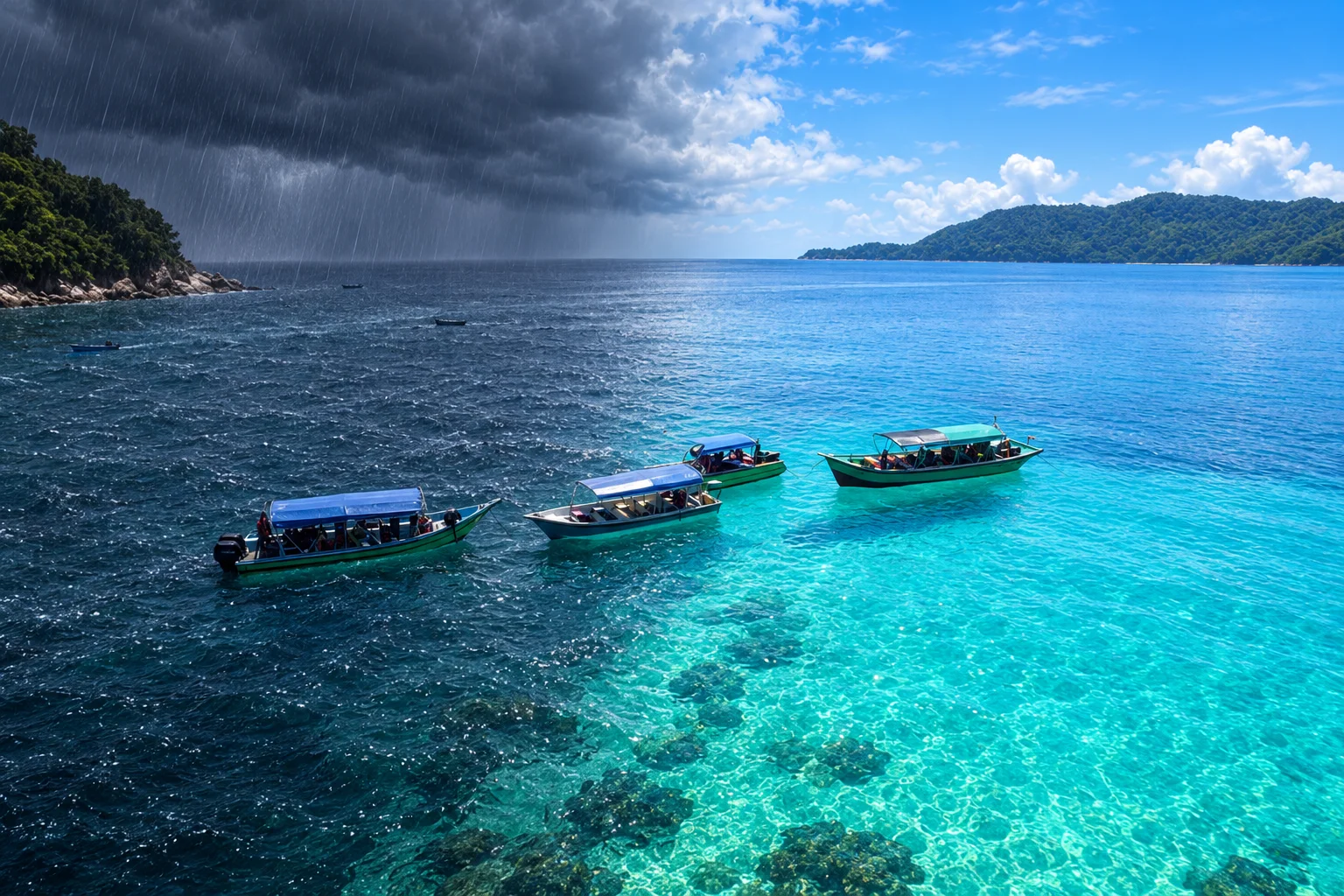
That does not mean every day during these months will be sunny. Terengganu has a tropical climate, so short showers and thunderstorms can occur at any time.
However, the risk of prolonged monsoon rain and rougher seas is generally much lower than during the peak Northeast Monsoon.
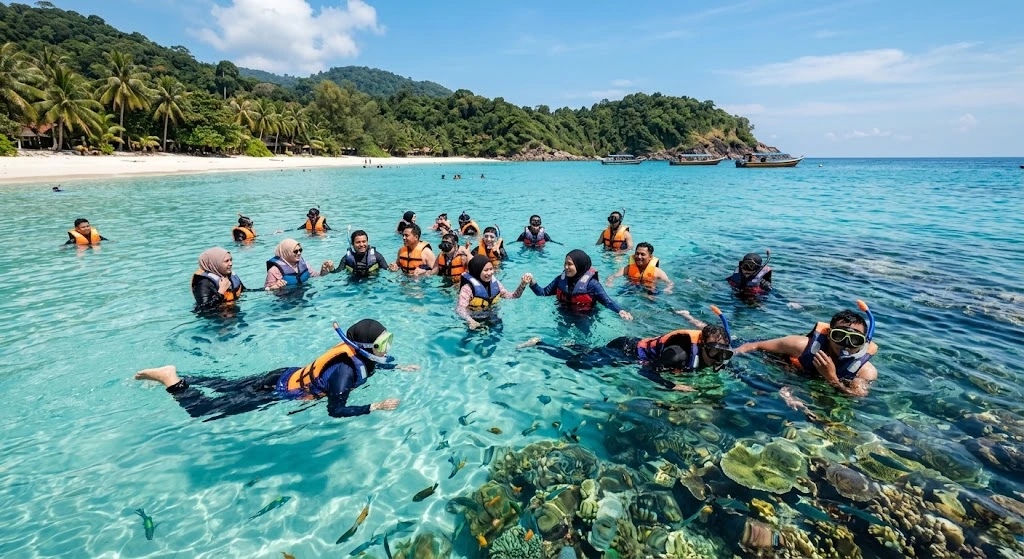
Terengganu Weather by Season
For trip planning, it is easier to think of Terengganu in four broad weather periods rather than traditional spring, summer, autumn and winter.
| Period | Typical Conditions | Travel Considerations |
|---|---|---|
| March–May | Hotter weather with increasing island activity; thunderstorms can occur during the inter-monsoon period. | Good period for islands, beaches and city sightseeing. |
| June–September | Relatively drier Southwest Monsoon period. June and July are among the driest months on much of the east coast. | Very practical for island holidays, snorkelling and road trips. |
| October | Transition towards the wetter season, with thunderstorms becoming more frequent. | Island trips may still be possible, but check resort and boat operations. |
| November–February | Peak Northeast Monsoon with heavier rainfall on the east coast. | Better suited to flexible mainland travel than an island-focused holiday. |
METMalaysia states that the Southwest Monsoon generally runs from late May to September and brings relatively drier conditions, while the Northeast Monsoon runs from November to March. Inter-monsoon periods can bring more frequent thunderstorms, particularly around April–May and October–November.

What Is Terengganu Like During the Northeast Monsoon?
The Northeast Monsoon is the biggest weather factor international visitors need to understand before planning Terengganu.
From roughly November to March, moist northeasterly winds from the South China Sea can bring sustained heavy rainfall to Malaysia’s east coast. Terengganu, Kelantan and Pahang are among the areas that can experience very heavy rain and flooding during stronger monsoon episodes.
November, December and January are climatologically the wettest months in east-coast states.
This affects travellers in several ways. Sea conditions can become rough, boat schedules may change, outdoor plans may be disrupted and some island accommodation shuts seasonally.
For example, Tourism Malaysia says resorts on Redang normally close for several months between November and February.
If your main reason for visiting Terengganu is snorkelling, scuba diving or beach time, the monsoon period is therefore not the most practical season.
Can You Still Visit Terengganu During Monsoon Season?
Yes. Terengganu does not completely close during the monsoon.
Kuala Terengganu remains a functioning city, and a mainland itinerary can still include markets, museums, food, cultural attractions and road trips when weather conditions allow.
The key is flexibility. Avoid building a schedule that depends on several consecutive days of perfect outdoor weather.
For a November-to-February visit, consider focusing more on Kuala Terengganu, local food, heritage attractions, museums and traditional crafts rather than structuring the entire holiday around islands.
Check METMalaysia forecasts and weather warnings close to your travel dates, particularly before long drives or coastal journeys.
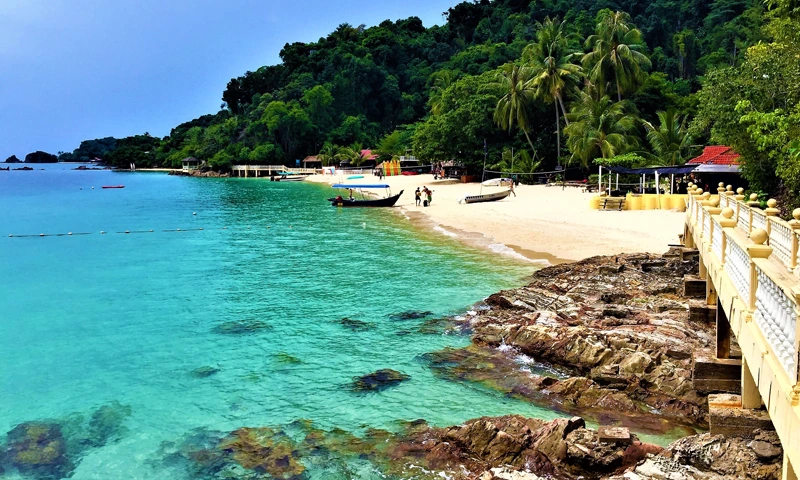
How Hot Is Terengganu?
Terengganu is tropical, so travellers should expect warm and humid conditions throughout the year.
METMalaysia reports that April and May generally record the highest average monthly temperatures in Peninsular Malaysia, while December and January are cooler.
During the Northeast Monsoon in Kuala Terengganu, extensive cloud and rain can keep daytime temperatures below typical tropical highs. METMalaysia notes that daytime temperatures during this period often do not reach 27°C, while nights are commonly around 21°C to 24°C.
Outside rainy periods, midday heat can feel much stronger.
For sightseeing, plan outdoor walking in the morning or later afternoon rather than spending several hours outside around midday.
When Should You Visit Redang, Perhentian and Kapas?
If the islands are the main reason for your trip, seasonality becomes much more important.
Redang Island
Tourism Malaysia recommends roughly March to October, while March to September is highlighted as a particularly favourable period for clearer skies and water visibility.
Perhentian Islands
Tourism Malaysia also identifies March to October as the main visiting period for the Perhentians.
Kapas Island
Kapas is reached from Marang Jetty, about 20 km from Kuala Terengganu, with Tourism Malaysia listing a typical boat journey of around 20 to 30 minutes.
Because boat operations are weather-dependent, confirm the latest schedule directly before travelling, especially early or late in the island season.
Which Months Are Better for Different Types of Trips?
For beaches, snorkelling and diving, consider roughly March to September.
For a combination of city sightseeing, beaches and road trips, March through September is also the easiest all-round period.
Travellers concerned about heavy rain may particularly like June and July, as METMalaysia’s climate data identifies these among the driest months in many east-coast districts.
If you are more interested in culture and food than islands, your travel dates can be much more flexible. Even then, November to January deserves extra weather planning.
What Should You Pack?
Lightweight, breathable clothing works for most of the year. Sunglasses, sunscreen, a hat and reusable drinking water are useful for beach and city days.
Also bring a compact umbrella or lightweight rain jacket. A supposedly “dry” month does not guarantee rain-free days in tropical Malaysia.
If your itinerary includes mosques or religious attractions, carry clothing that covers your shoulders and knees. Terengganu has a strong Malay-Muslim cultural identity, so modest clothing is particularly useful around religious sites.
For island trips, add reef-safe sun protection where available, waterproof storage for electronics and footwear that can handle boats and wet jetties.
What Else Should First-Time Visitors Know?
Do not book flights, hotels and island transfers as though every journey is guaranteed to run exactly on schedule. Sea transport is more weather-dependent than city transport.
Allow some buffer between an island boat arrival and an important flight, especially when travelling during shoulder months.
Terengganu’s island gateways also differ. Tourism Malaysia lists Marang for Kapas, Kuala Besut for Perhentian, Merang and Shahbandar for Redang-related access, and Kuala Dungun for Tenggol.
This matters because “Terengganu island holiday” can involve substantial road travel between Kuala Terengganu and the correct jetty.
Finally, book earlier around Malaysian school holidays and public holidays. Popular island accommodation and transport can become much busier even when the weather is favourable.
Final Thoughts
For most international travellers, the best time to visit Terengganu is between March and September, particularly when beaches and islands are a priority.
June and July are generally among the drier months on the east coast, while April and May tend to be hotter. From November to March, the Northeast Monsoon changes the experience significantly, bringing heavier rain and more uncertainty for island travel.
Terengganu is still worth visiting outside peak island season, but your itinerary should match the weather. Choose the season first, then decide whether your trip should focus on islands, mainland culture or a mixture of both.